
Magnetic sheet strength factory





How to guide children to use Castle Magnetic blocks
Here are some ways to properly guide your child to build with Castle Magnet Toy Building Block Magnetic Tiles For Girls Boys:
First, arouse interest stage
The story is introduced to children to tell some fairy tales related to the castle, such as "Sleeping Beauty" and "Rapunzel". In the course of telling, focus on the appearance of the castle, the structure, such as tall towers, strong walls and deep moat. Then take out the castle magnet toy blocks and tell the child that they can use them to build the castle in the story. This can stimulate children's curiosity and interest, so that they are more willing to participate in the construction of activities.
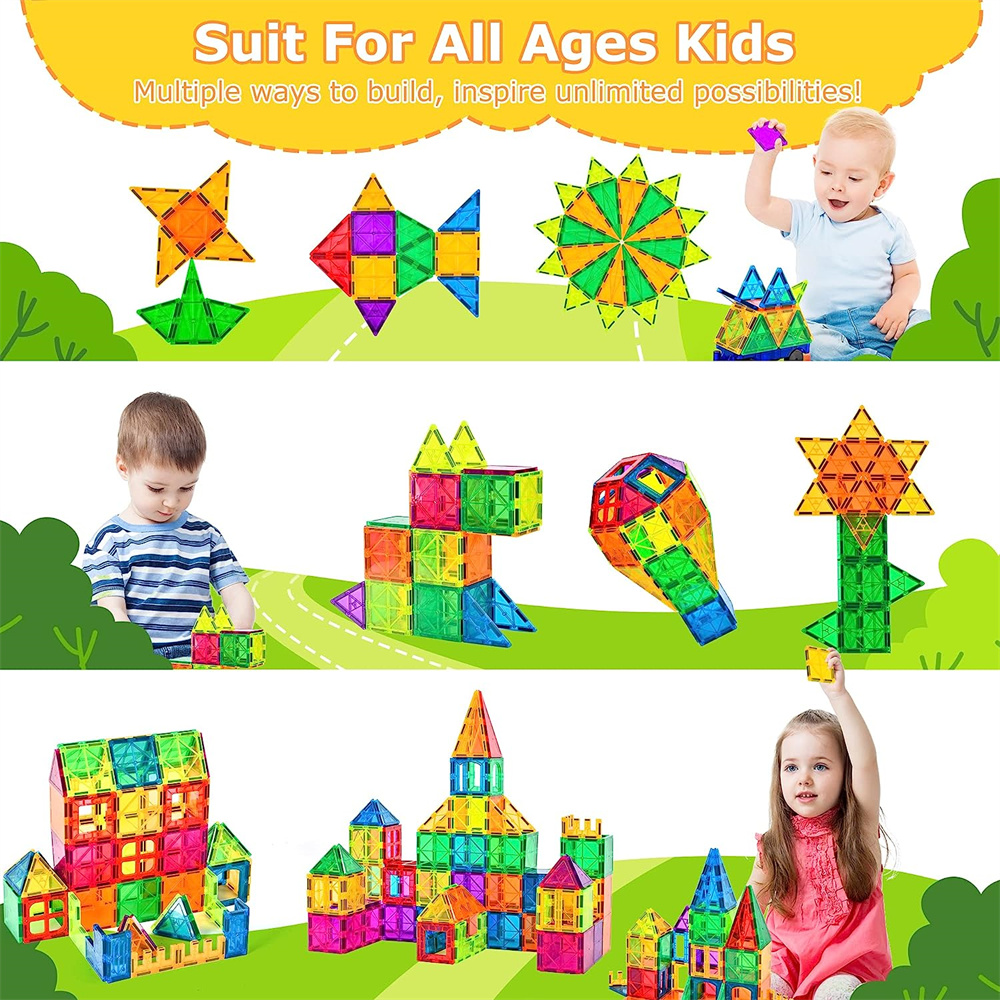
Show the finished product in advance to build a beautiful castle model with castle magnet toy blocks. When children see this finished product, they will be fascinated by the beauty and grandeur of the castle. Show children the various parts of the castle, such as how the gate of the castle is spliced with blocks, and how the shape of the tower is combined, so that children have an intuitive feeling of the effect after construction, so as to stimulate their desire to build their own hands.

Second, the foundation construction guidance stage
First let the child carefully observe the shape, color and magnetic characteristics of each block. You can count with the child that there are several different shapes, such as squares, triangles, rectangles, etc., and let the child feel how the blocks are magnetically adsorbed together. For example, pick up two blocks, put their magnetic sides close together, let the child see the process of their automatic adsorption, so that the child can better understand the principle of the block stitching.
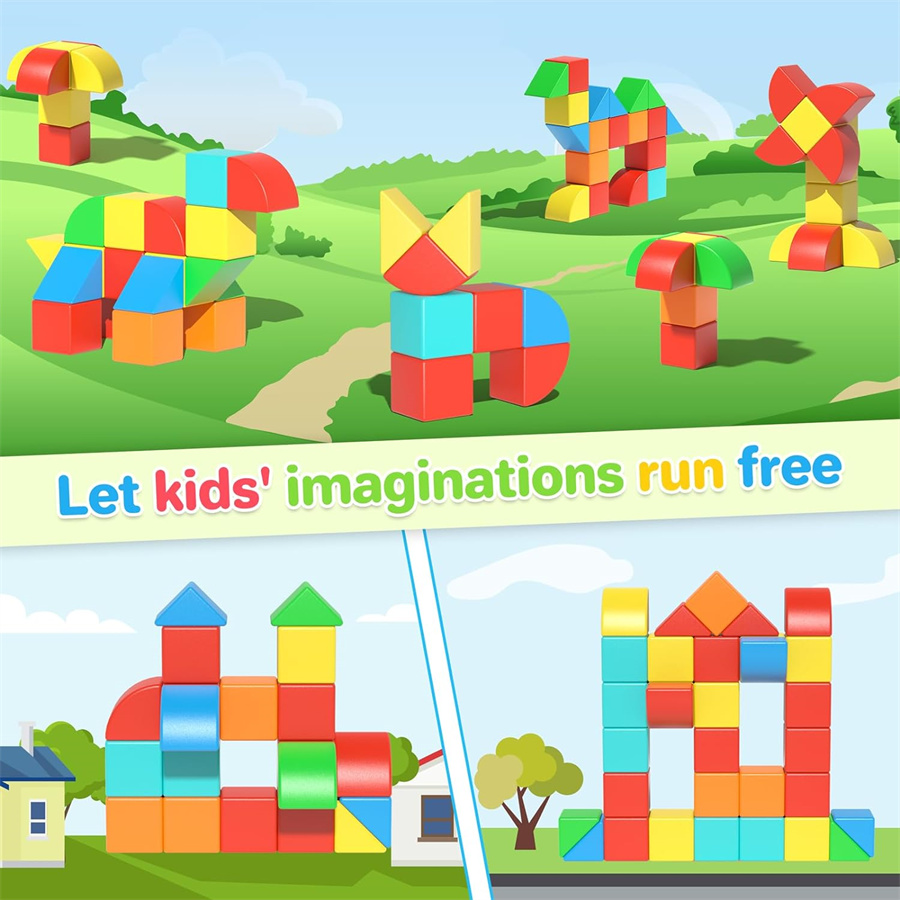
Simple structure construction Guide children to build from the most basic structure. For example, teach your child to build a flat surface with a few square blocks, then gradually increase the height to form a simple wall. Or build a roof shape out of triangular blocks. In the process of children's construction, to encourage them to try their own hands, even if they make mistakes, do not rush to correct, but guide them to find the problem, such as if the Building Blocks are not firmly spliced, let them think about whether the magnetic surface is not aligned.
3. Creative guidance stage
Theme creative set some themes, such as "magic castle", "sea castle", "forest castle" and so on. Encourage children to choose different colored Blocks To Build according to the theme. For example, for the "submarine castle", children can be guided to choose blue and green blocks to represent the sea water and seaweed, and use transparent blocks as the window of the castle, so that children can imagine the scene of underwater creatures swimming around the castle. Such theme ideas can stimulate children's imagination and creativity.
Function creativity guides children to think about the function of the castle, which is reflected in the construction. For example, ask your child how the castle defends against enemies and have them build a moat, drawbridge or watchtower around the castle. Or ask children how people live in the castle and have them build bedrooms, kitchens and other rooms inside the castle. This kind of functional creativity can allow children to incorporate more thinking in the construction process and improve their logical thinking ability.

Fourth, cooperation and sharing stage
If there are multiple children playing together, you can organize them to cooperate in building. Assign different tasks to the children, such as one child building the tower of the castle, another child building the wall, etc. In the process of cooperation, the children are taught how to communicate and coordinate, such as how to discuss the overall layout of the castle, how to share blocks and so on. This not only improves children's social skills, but also allows them to learn to work as a team.
When the kids have finished building, encourage them to share their work. Children can introduce the castle they built to their family or friends, including the name, characteristics, and special functions of the castle. This can boost a child's confidence and expression skills, while also allowing them to be inspired by the work of others.