
Magnetic sheet strength factory


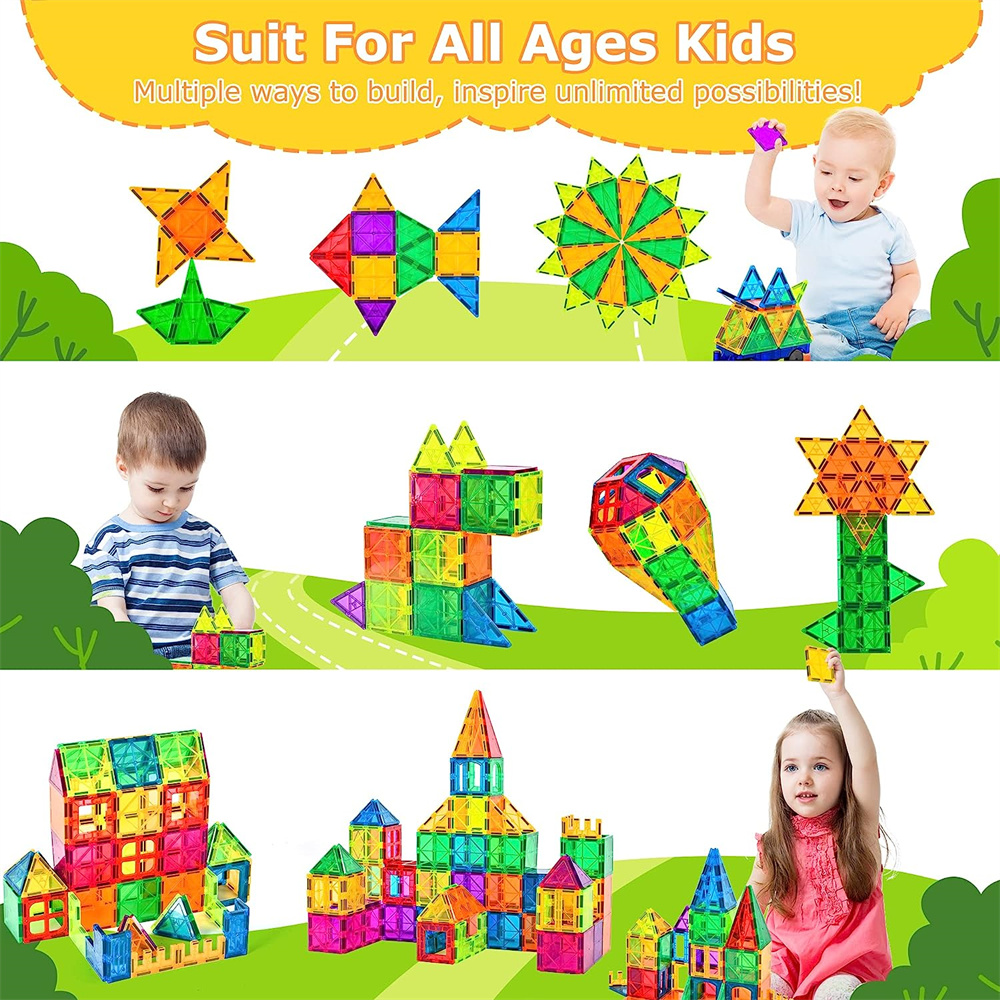

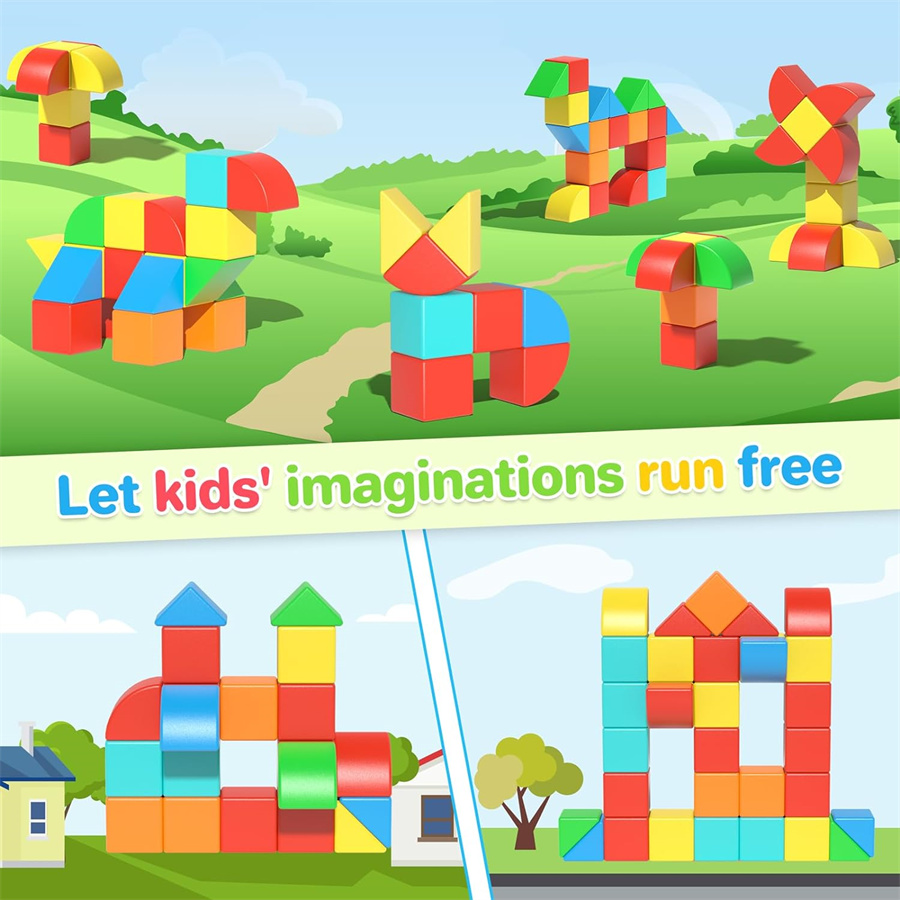


What are the applications of magnetic building blocks in art education?
As an innovative educational toy, magnetic Building Blocks play a significant role in improving children's spatial intelligence. Here are a few ways magnetic blocks can help children improve their spatial intelligence:
Sensing and manipulating spatial patterns: Magnetic blocks, through their magnetically connected properties, enable children to form patterns of the external spatial world in the brain and be able to use and manipulate these patterns. This ability allows one to think in terms of three dimensions, to perceive external and internal images, and to move calmly through space, manipulating the position of objects at will.
Developing observation and visual sensitivity: Using magnetic blocks, children need to observe the shape, size and color of objects and build three-dimensional Spaces in their minds. This helps to develop children's visual sensitivity and accuracy, and promotes their grasp of spatial relationships.
Cultivate the ability of image thinking: The construction activities of magnetic blocks allow children to learn how to observe and construct three-dimensional space in touch and operation, and cultivate their imaginative and imaginative thinking imagery.
Promote the ability to convert 2D and 3D Spaces: Children need to convert 2D drawings into 3D entities when using magnetic blocks, and this ability to convert is an important part of spatial intelligence.

Improve hands-on ability and innovative thinking: In the process of piecing together, children need to fine operation, constantly try and adjust, exercise hand-eye coordination. At the same time, facing the unknown creative challenges, they need to break the routine, exert their imagination, and cultivate innovative thinking.
Enhance mathematics and science literacy: The splicing of magnetic blocks contains geometric principles, and children learn the basic knowledge of plane graphics and three-dimensional geometry imperceptibles in the process of building different shapes.
Promote social interaction and teamwork: In multiplayer games, children learn to share resources, solve problems through negotiation, and work together to complete large-scale works, which is conducive to developing their cooperative spirit and communication skills.
Advantages of dynamic structure construction: The design of magnetic building blocks gives it an unparalleled advantage in the construction of dynamic structures. This "invisible bond" not only gives magnetic building blocks a unique splicing method, but also makes it have a lot of exploration in space construction.
To sum up, magnetic building blocks provide children with an edutainment learning environment through their unique magnetic connection and modular design, effectively enhancing children's spatial intelligence.